


Digital Dentistry
Digital dentistry involves the use of computer-aided technological devices in diagnosis, treatment, and planning.
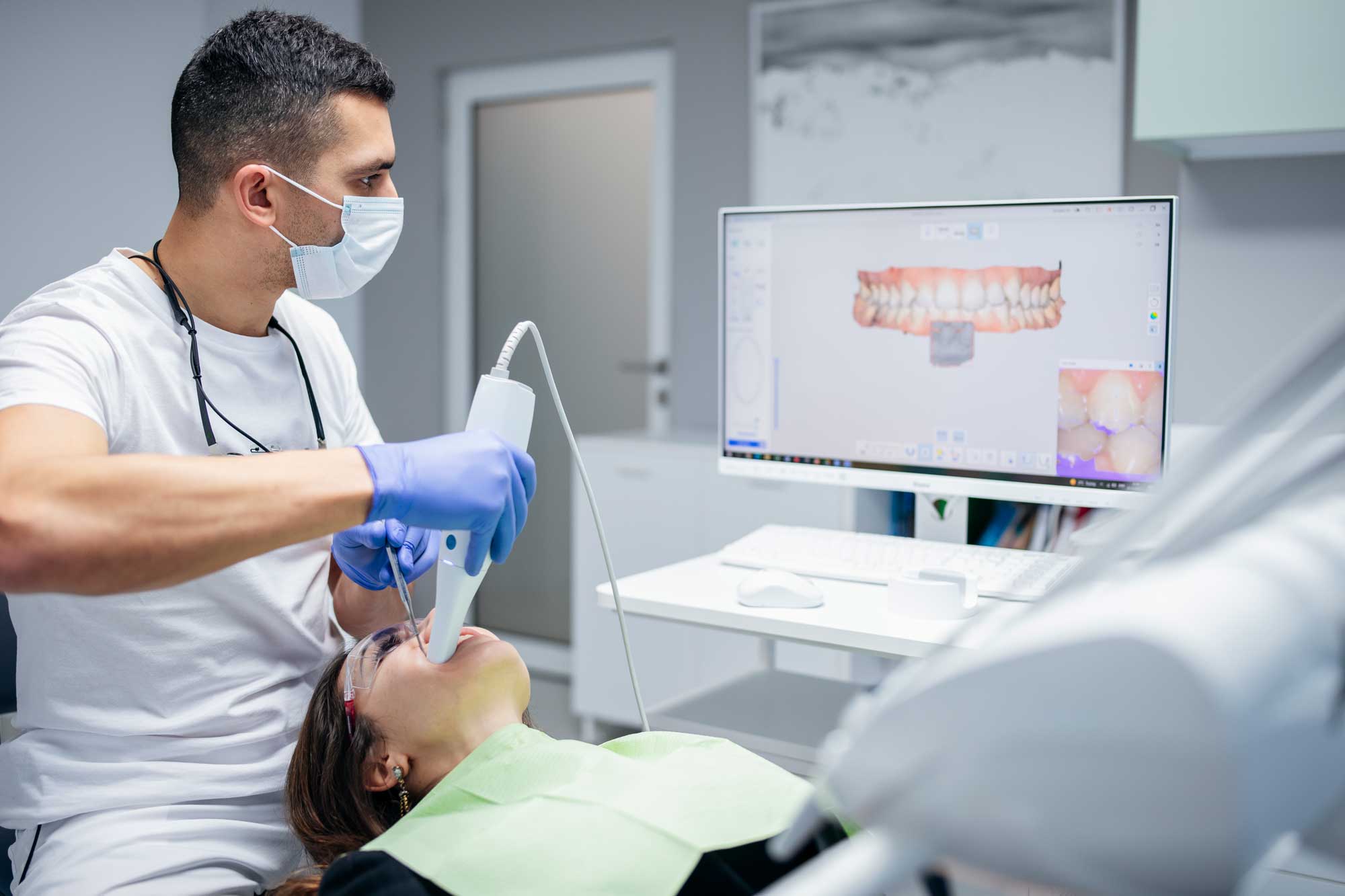
It is implemented using advanced technology devices and software that offer high precision, comfort, and speed. Examples of such devices include CBCT scanners, intraoral scanners, 3D printers, and CAD/CAM systems (computer-aided design and manufacturing). These technologies significantly reduce human error, shorten treatment times, and improve both comfort and success rates.
ADVANTAGES OF DIGITAL DENTISTRY
Accurate Diagnosis and Treatment Planning
With digital X-rays and 3D tomography devices, detailed images of the teeth and jaw structure are obtained. This enables more accurate and safer planning for procedures such as implants, orthodontics, or aesthetic treatments.
Comfortable Impressions
Intraoral scanners eliminate the need for traditional impression materials. Highly accurate digital impressions can be taken in a short time, reducing discomfort and gag reflex for patients.
Time Efficiency
Thanks to CAD/CAM technology, digitally designed crowns, bridges, or temporary teeth can be produced on the same day, significantly reducing treatment duration.
High Aesthetic and Functional Fit
Digital design software allows teeth to be customized with a natural appearance tailored to the individual. As design and production are computer-guided, human-related errors are minimized, resulting in both aesthetic and functional precision.
Pre-Treatment Visualization
Smile design software allows patients to preview the expected outcome of their treatment. These simulations enable patients to see the final result in advance and provide input, increasing satisfaction and trust.
Implant and Surgical Guides
Surgical guides for implant placement can be created based on 3D tomography images. These guides allow for highly precise implant placement, reducing the risk of complications and improving success rates.